

PhishEye connects discovery, investigation, evidence, ownership, and follow-up for trademark monitoring. Teams can use the same operational record to prioritize customer-visible risk, coordinate with providers, and measure progress from first detection through mitigation instead of treating each alert as an isolated event.
Protect your marks where they are abused
Coverage areas
Domains, social, app stores (scoped to your program)
Delivery
Platform workflows + optional managed services
Outputs
Prioritized queues, evidence, takedown tracking
Coverage
Threat patterns programs typically monitor
Programs are tuned to your marks and channels; the list below reflects common categories teams prioritize.
Live trademark misuse on web and social
Active uses of your marks tied to real customer-facing harm, separated from passive mentions and editorial coverage.
Counterfeit listings on marketplaces
Goods sold using your brand across Amazon Brand Registry, eBay VeRO, Etsy, Walmart, and regional storefronts.
New-filing alerts for confusingly similar marks
USPTO, EUIPO, and WIPO filings that approach your portfolio — surfaced before they grant or progress.
UDRP and URS threshold detection
Domain disputes scoped to cases where ICANN dispute mechanisms are the right tool, not a heavy hammer.
Cease-and-desist evidence packaging
Structured exports ready for counsel: detection timestamps, page captures, mark references, and use-in-commerce context.
Counsel-ready exports for disputes
Audit trails and chain-of-custody for evidence used in trademark opposition, takedowns, and litigation.
One program for every place your marks get abused
Scan the core moves first; the FAQs and related guides carry evidence standards, enforcement paths, and how this fits alongside legal counsel.
Where trademark abuse actually appears
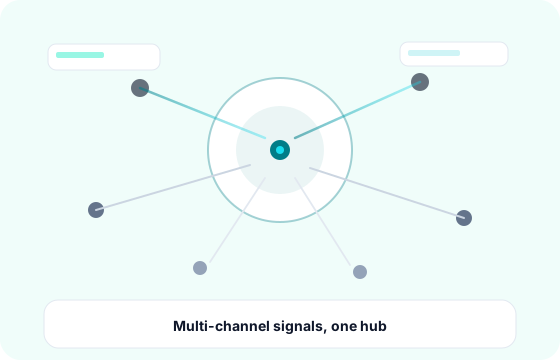
Unauthorized mark use is not one channel. It is impersonation and typosquat domains, cloned storefronts, social handles and pages, fake mobile apps, and paid-search or keyword abuse that borrows your name to divert trust. Effective monitoring ties those signals together so analysts see one campaign, not scattered mentions.
Prioritized by customer harm, not mention volume
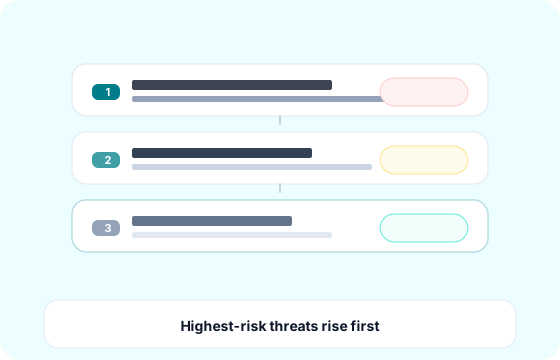
Not every use of your mark is an emergency. Payment scams, credential-phishing pages, and viral impersonation outrank gray-market references and parked lookalikes. Explicit severity tiers keep enforcement defensible when a raw mention feed makes everything look urgent.
Evidence built for enforcement
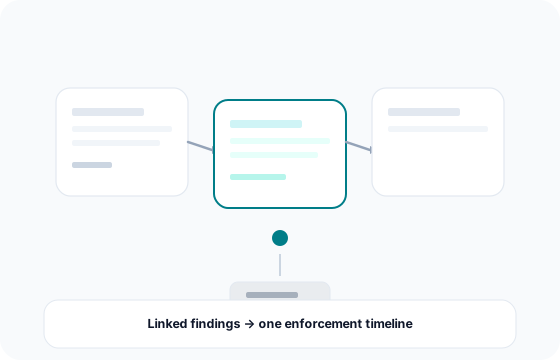
Registrars, hosts, platforms, and app stores act faster on reports that carry clear mark references, side-by-side comparisons, capture timestamps, and a concise harm narrative. Consistent evidence packaging cuts back-and-forth and supports formal escalation such as UDRP or URS when counsel chooses that path.
From detection to confirmed takedown
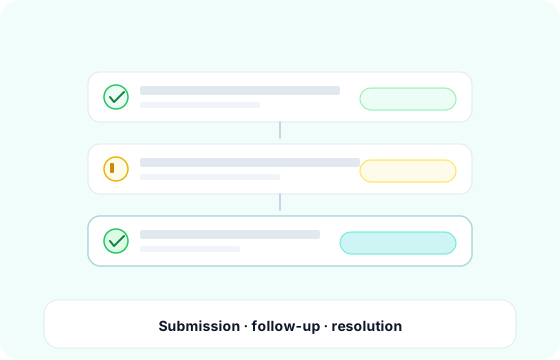
Track submissions, follow-ups, partial mitigations, and repeat offenders across registrars, hosts, CDNs, app stores, social networks, and ad platforms. Reporting reflects customer-visible outcomes and recycle rates, not ticket opens alone.
Who this is for
Brand, legal, and trust teams that own trademark enforcement online; IP counsel who need operational evidence to support demands and filings; and security or fraud groups where mark abuse leads directly to phishing and customer loss. Also teams writing RFPs who weigh evidence quality and enforcement throughput over feature-list breadth.
Digital trademark monitoring vs. registry watch
This is monitoring of how your marks are used and abused across live digital channels — domains, websites, social, apps, marketplaces, and search — so you can act on active impersonation and customer harm. It is distinct from trademark-register watch services that scan new applications at offices such as the USPTO, EUIPO, and WIPO for potentially conflicting filings.
The two are complementary. Register watches and clearance sit with your trademark counsel and cover the legal filing landscape; PhishEye covers the operational, customer-facing abuse layer and the evidence and takedowns that follow. PhishEye does not replace counsel or file on your behalf — it makes the online-abuse side faster and better documented.

How it connects to phishing and domain protection
Trademark abuse rarely stays in one lane: a lookalike domain becomes a phishing page, a cloned social profile drives to a fake app, a paid ad lands on an impersonation site. Sharing one case timeline with domain monitoring, phishing detection, and search checks means legal, fraud, and security work a single campaign instead of duplicating tickets across tools.

Protect revenue and customer trust
See how PhishEye centralizes detections, evidence, and takedowns so security, fraud, and brand teams share one operational picture.
FAQs
Common questions
What does trademark monitoring cover?
Is this the same as a trademark register watch?
Does PhishEye replace our trademark counsel?
What should we prioritize first?
Explore further
Related pages
Ready to scope a program for your marks and channels?