

PhishEye connects discovery, investigation, evidence, ownership, and follow-up for search result protection. Teams can use the same operational record to prioritize customer-visible risk, coordinate with providers, and measure progress from first detection through mitigation instead of treating each alert as an isolated event.
SERP monitoring pipeline
Coverage areas
Domains, social, app stores (scoped to your program)
Delivery
Platform workflows + optional managed services
Outputs
Prioritized queues, evidence, takedown tracking
Coverage
Threat patterns programs typically monitor
Programs are tuned to your marks and channels; the list below reflects common categories teams prioritize.
Branded SERP poisoning campaigns
High-intent branded queries (support, login, payment) where attackers outrank you with deceptive results.
Cloaked redirects (bot vs browser)
Pages that show Googlebot a legitimate article and the real visitor a phishing portal or scam checkout.
Parasite SEO on hijacked subdomains
Abandoned subdomains of trusted parent domains rehosting fraud content and inheriting the parent's ranking authority.
Competitor and impostor keyword bidding
Paid-search abuse of brand terms — distinguishing legal competitor bidding from clear scam-ad fraud.
AI-generated lookalike support pages
AI-spun FAQs and 'official help' articles that target long-tail queries to outrank slow-moving real pages.
Ad-chain and landing-page swaps
Ad-tech chains, cloaking servers, and post-click landing rotations that let scam campaigns survive policy reviews.
Building the branded query universe
Start by enumerating the queries that decide whether a customer reaches the real you or someone pretending to be you: brand + support, brand + login, brand + status, brand + cancel, brand + payment, brand + product names, brand + locale. The universe lives in a maintained list, not in an analyst's head — additions follow product launches, M&A, and campaign cycles. Coverage is the first failure mode; you cannot triage what you never crawled.
Destination scoring beyond rank
A page can rank position three and be harmless, or rank position twelve and be actively stealing credentials. Rank alone is the wrong primary signal. Score destinations on what the page actually does: redirect chains, cloaking divergence between bot and browser, page-behavior fingerprints (form fields collected, off-domain POST targets), and proximity to known fraud infrastructure. The result is a triage stack ranked by harm, not vanity.
Routing into one shared case queue
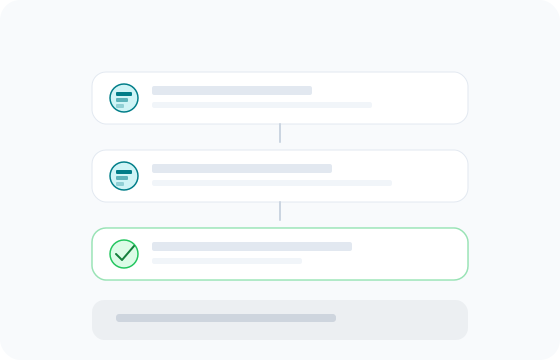
SERP findings should not live in a separate ticketing silo. A typosquat that ranks for your brand needs the same case ID as the domain itself when domain monitoring already picked it up. Routing rules decide which channel handles enforcement — registrar abuse desk for the host, the search engine's spam report for the listing, your platform's abuse channel if it lives on a third-party subdomain — and the case timeline tracks all three in parallel.
Protect revenue and customer trust
See how PhishEye centralizes detections, evidence, and takedowns so security, fraud, and brand teams share one operational picture.
FAQs
Common questions
What counts as search result abuse?
How do we keep this from becoming a keyword spreadsheet?
Can search monitoring link to takedown workflows?
Explore further
Related pages
Ready to scope a program for your marks and channels?