
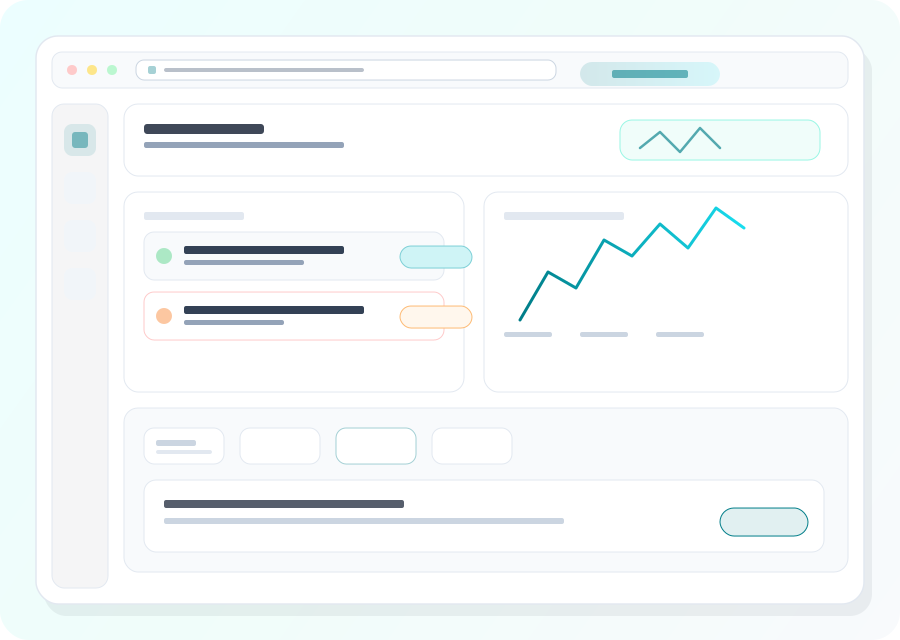
PhishEye connects discovery, investigation, evidence, ownership, and follow-up for automated takedowns. Teams can use the same operational record to prioritize customer-visible risk, coordinate with providers, and measure progress from first detection through mitigation instead of treating each alert as an isolated event.
Coverage areas
Domains, social, app stores (scoped to your program)
Delivery
Platform workflows + optional managed services
Outputs
Prioritized queues, evidence, takedown tracking
Coverage
Threat patterns programs typically monitor
Programs are tuned to your marks and channels; the list below reflects common categories teams prioritize.
What automation handles well
High-volume, pattern-stable abuse: cookie-cutter phishing kits, cloned login templates, and lookalike retail domains.
What stays in analyst hands
Novel legal theories, slow jurisdictions, and providers that require custom narrative — surfaced, not hidden in a black box.
Evidence bundling at the point of detection
Each case is born with its captures, timestamps, and identifiers — not assembled by hand at submission time.
Queue routing and stall reminders
Cases route to the right channel automatically; reminders fire when a provider thread sits past its expected response window.
Recycle detection on closed cases
A new host hitting the same kit fingerprint reopens the original case instead of creating a fresh untriaged ticket.
Throughput and time-to-suspend reporting
Leadership metrics that follow takedown work end to end — median time, recycle rate, and analyst hours saved.
What to automate first
High-volume, pattern-stable abuse: lookalike retail domains, cookie-cutter phishing kits, and cloned login templates with predictable evidence.
What stays manual
Novel legal theories, slow jurisdictions, and providers that demand custom letters. Automation should surface these-not hide them in a black box.
Operational reporting
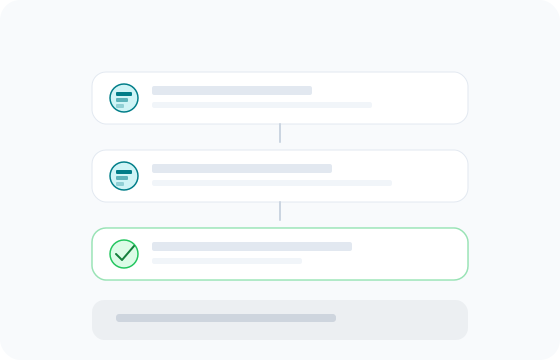
Throughput, recycling rate, and median time-to-suspend become leadership metrics alongside raw detection counts.
Protect revenue and customer trust
See how PhishEye centralizes detections, evidence, and takedowns so security, fraud, and brand teams share one operational picture.
FAQs
Common questions
What should be automated first?
What should not be fully automated?
How do we measure automation success?
Can analysts pause, override, or roll back automated steps?
Ready to scope a program for your marks and channels?