
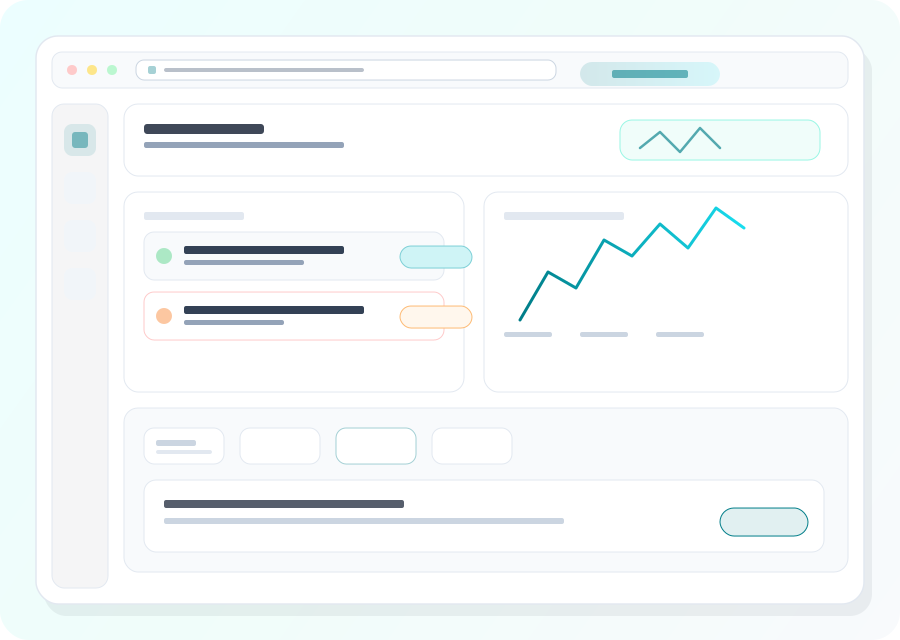
PhishEye connects discovery, investigation, evidence, ownership, and follow-up for executive impersonation protection and vip monitoring. Teams can use the same operational record to prioritize customer-visible risk, coordinate with providers, and measure progress from first detection through mitigation instead of treating each alert as an isolated event.
VIP and leadership risk
Coverage areas
Domains, social, app stores (scoped to your program)
Delivery
Platform workflows + optional managed services
Outputs
Prioritized queues, evidence, takedown tracking
Coverage
Threat patterns programs typically monitor
Programs are tuned to your marks and channels; the list below reflects common categories teams prioritize.
Clone profiles of leadership and finance
Impostor accounts using approved imagery and bios to pressure employees, suppliers, or investors.
Scam DMs and engagement-baited lures
Direct-message funnels, fake AMAs, and giveaway scams that route victims off-platform to credential or wallet drains.
Deepfake voice and video impersonation
Synthetic media used in fake recruiter outreach, investor briefings, or internal-communications fraud.
Coordinated impersonation networks
Linked profile clusters operated by the same actor across platforms — clustered for one takedown narrative.
Cross-channel chains (social → web → wallet)
How a clone profile points to a lookalike domain points to a payment scam — tracked as one case, not three tickets.
Comms trees and escalation tabletops
Pre-agreed communications language, legal review hooks, and platform-specific reporting paths ready before incidents.
Cross-channel VIP defense with fewer noisy alerts
The core moves for leadership risk, FAQs and the response playbook cover evaluation, after-hours rules, and tabletop prep.
Where impersonation chains together
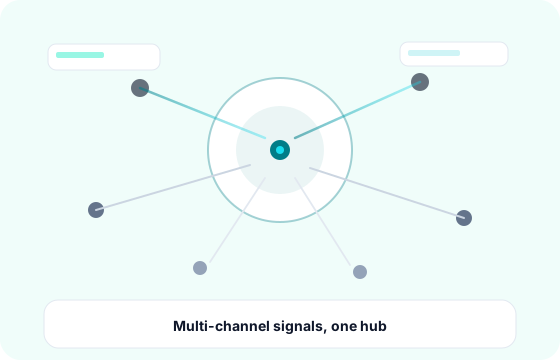
Clone profiles, lookalike domains in email or DMs, misleading apps, deepfake lures, and phishing pages that cite leadership often chain: social points to a domain points to a wallet drain. Coverage should connect those signals instead of siloing social and web queues.
What a VIP program optimizes for
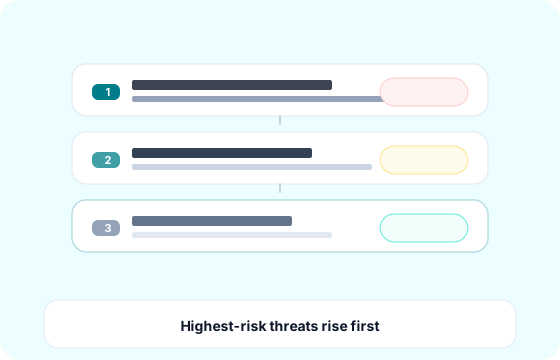
Fewer, higher-confidence alerts than company-wide monitoring; faster escalation and pre-agreed comms trees; watchlists built from approved identifiers and public imagery with privacy alignment. Severity reflects credibility and reach, payment scams and wide distribution outrank minor parody, even when counsel tracks both.
One case file for platforms and providers
When infrastructure overlaps, evidence should travel as one pattern, not isolated screenshots. Role-based views give security detail, communications cautious language, and legal exports suitable for disputes and appeals.
Fast takedowns, aligned stakeholders
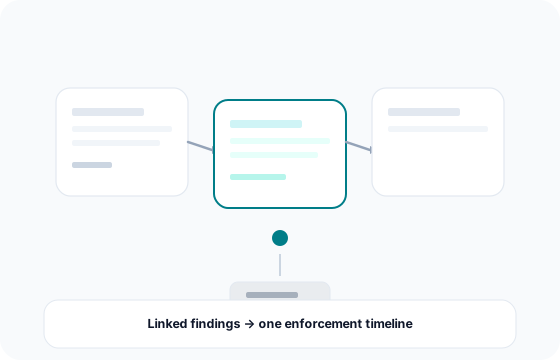
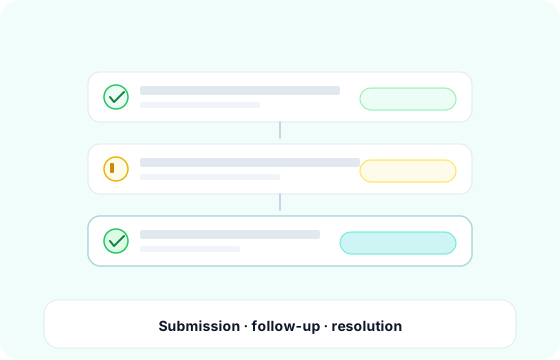
Track submissions, follow-ups, and partial mitigations like any enforcement pipeline. When platforms lag, alternate containment may run in parallel. Exportable timelines help PR and legal brief from verified facts, what is confirmed, suspected, and safe to say publicly.
What VIP monitoring covers
VIP monitoring is watchlist-driven: you name the people who carry risk - the CEO, CFO, board members, founders, anyone whose authority can move money or move markets - and monitoring runs against those identities specifically rather than against the company name alone.
Coverage spans the channels impersonators actually use: social profiles cloned from real photos and bios, lookalike domains registered in an executive's name, messaging and DM lures, fake apps and investment schemes citing leadership, and search and ad placements trading on their reputation. Naming the watchlist is what buys precision - a company-wide monitor buried in brand mentions will not surface the one fake CFO profile that matters.
Personal data exposure and doxxing removal
Impersonation gets easier the more an attacker knows. Home addresses, personal phone numbers, private email addresses, family members and travel patterns are routinely available through people-search sites, data brokers, leaked datasets, forums and paste sites - and that material is what turns a generic scam into a convincing, personalised one. It is also what makes a credible threat to physical safety.
VIP monitoring covers that exposure directly: tracking where an executive's personal information appears across data brokers, people-search listings, breach and paste data, and doxxing posts, then pursuing removal with the sites and brokers hosting it. Where a listing cannot be removed outright, the goal is to reduce reach and record the exposure so security and legal can act on it.
Personal data and impersonation are the same problem viewed from two ends. Doxxed details make a cloned profile or a deepfake payment request believable, so removing that raw material lowers the success rate of every downstream attack, not just the one incident that surfaced it.
How fast can a fake executive profile be removed?
It depends on the platform, not on how obvious the fake is. Major social platforms have dedicated impersonation reporting and often act within hours when a report is complete. Smaller platforms, messaging apps and app marketplaces are slower and more variable, and some require the impersonated individual to submit identity documents personally before they will act.
That last requirement is the most common cause of delay, and it is worth preparing for before an incident. Knowing which platforms demand proof of identity from the executive, and having that consent and documentation ready in advance, removes days from the response.
Why executive takedowns fail
Impersonation reports get rejected for reasons that differ from ordinary phishing takedowns. Platforms distinguish impersonation from parody and commentary, and a report that does not establish deceptive intent will be closed. Reports filed by a security team rather than the impersonated person are often deprioritized or refused outright. And a profile removed in isolation tells you nothing about the others the same operator is running.
The other failure is treating it as a single-channel problem. Impersonation chains: a cloned social profile points to a lookalike domain, which points to a payment request. Removing the profile while the domain stays live leaves the campaign working.
Deepfake voice and video
Synthetic audio and video of named executives has moved from novelty to a working fraud technique, most often as a voice note or short clip that authorizes an urgent payment or lends credibility to an investment scam. The defense is not detection alone - it is process. A pre-agreed verification path for financial authority, one that does not depend on recognizing a voice, removes the mechanism the attack relies on.
Monitoring contributes by finding the distribution: the accounts and sites publishing the synthetic media, and the campaign infrastructure behind them, so the content can be reported and the wider operation mapped rather than treated as an isolated clip.
How this relates to phishing takedowns
The enforcement machinery is shared. Once a fake executive profile, spoofed domain or scam page is confirmed, removal follows the same path as any other takedown: evidence assembled to the recipient's standard, submitted to the platform, registrar or host that can act, then tracked to confirmed removal and watched for reappearance.
What differs is the front half. Executive protection is watchlist-driven rather than brand-driven, the evidence often needs the individual's participation, and severity is judged on credibility and reach rather than volume. One convincing fake CFO profile carrying a payment request outranks a hundred low-quality name mentions.
Managed program or self-serve platform
A managed program suits organizations that want watchlists maintained, reports filed and platform relationships handled on their behalf, particularly where the executive's own participation needs coordinating. A platform suits teams who want the monitoring, evidence and case tracking in one place with their own analysts deciding what to escalate.
PhishEye supports both. The test either way is the same: ask to see the evidence bundle actually submitted for an impersonation case, how the vendor handles platforms that require the executive personally, and what happens when a removed profile returns under a new handle a week later.
Who this is for
Corporate communications, security, legal, and EA teams supporting high-profile leaders. Boards and risk committees that need defensible reporting on impersonation volume, closure, and escalation, without alert floods executives learn to ignore.
Protect revenue and customer trust
See how PhishEye centralizes detections, evidence, and takedowns so security, fraud, and brand teams share one operational picture.
FAQs
Common questions
Which channels matter for executive impersonation?
How should communications and legal be involved?
Can we protect a small set of high-profile leaders only?
How is VIP monitoring different from company-wide brand monitoring?
Ready to scope a program for your marks and channels?