

PhishEye connects discovery, investigation, evidence, ownership, and follow-up for social media monitoring and takedowns. Teams can use the same operational record to prioritize customer-visible risk, coordinate with providers, and measure progress from first detection through mitigation instead of treating each alert as an isolated event.
Coverage areas
Domains, social, app stores (scoped to your program)
Delivery
Platform workflows + optional managed services
Outputs
Prioritized queues, evidence, takedown tracking
Coverage
Threat patterns programs typically monitor
Programs are tuned to your marks and channels; the list below reflects common categories teams prioritize.
Clone profiles of leadership and finance
Impostor accounts using approved imagery and bios to pressure employees, suppliers, or investors.
Scam DMs and engagement-baited lures
Direct-message funnels, fake AMAs, and giveaway scams that route victims off-platform to credential or wallet drains.
Deepfake voice and video impersonation
Synthetic media used in fake recruiter outreach, investor briefings, or internal-communications fraud.
Coordinated impersonation networks
Linked profile clusters operated by the same actor across platforms — clustered for one takedown narrative.
Cross-channel chains (social → web → wallet)
How a clone profile points to a lookalike domain points to a payment scam — tracked as one case, not three tickets.
Comms trees and escalation tabletops
Pre-agreed communications language, legal review hooks, and platform-specific reporting paths ready before incidents.
What we look for
Handle similarity, stolen avatars, scam funnels in bios, and coordinated networks pushing the same landing page.
From alert to platform action
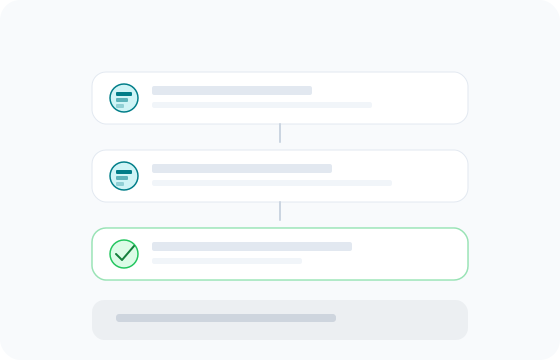
PhishEye packages platform-specific evidence to reduce back-and-forth. Track ticket IDs until resolution or escalation.
Protect revenue and customer trust
See how PhishEye centralizes detections, evidence, and takedowns so security, fraud, and brand teams share one operational picture.
FAQs
Common questions
Why is social-specific evidence important?
Do you only monitor major networks?
How do you handle coordinated scam rings?
Can social alerts tie to domains, apps, or phishing pages?
Ready to scope a program for your marks and channels?