

PhishEye connects discovery, investigation, evidence, ownership, and follow-up for typosquatting protection. Teams can use the same operational record to prioritize customer-visible risk, coordinate with providers, and measure progress from first detection through mitigation instead of treating each alert as an isolated event.
Lookalike domains and registrations
Coverage areas
Domains, social, app stores (scoped to your program)
Delivery
Platform workflows + optional managed services
Outputs
Prioritized queues, evidence, takedown tracking
Coverage
Threat patterns programs typically monitor
Programs are tuned to your marks and channels; the list below reflects common categories teams prioritize.
Typosquats and homoglyph lookalikes
String permutations, IDN-encoded homoglyphs, combosquats, and TLD swaps that resemble your customer-facing hostnames.
Registration lifecycle signals
Newly-registered, recently-expired, and re-registered domains in your brand neighborhood — caught before they host content.
DNS, MX, and certificate fingerprints
Configuration patterns that separate active phishing infrastructure from parked or investor-grade name clashes.
Live content scoring
Page-behavior, redirect-chain, and proximity-to-customer-journey scoring so credential harvesters surface before noise.
Hostname rotation and recycle patterns
Cross-host clustering when a campaign moves between subdomains, registrars, or TLDs to evade single-host enforcement.
Registrar abuse-desk submission paths
Host-specific evidence formats and routing rules for the registrars and resellers that actually respond to your queue.
From noisy candidates to enforceable cases
Short blocks for the core workflow, FAQs and guides cover pilots, false-positive discipline, and handoffs to phishing programs.
Generation and live risk are different questions
Candidates show what could exist; DNS, certificates, MX, content, and redirects show what is dangerous now. Good scoring separates parking and investor noise from active impersonation tied to your login and payment paths.
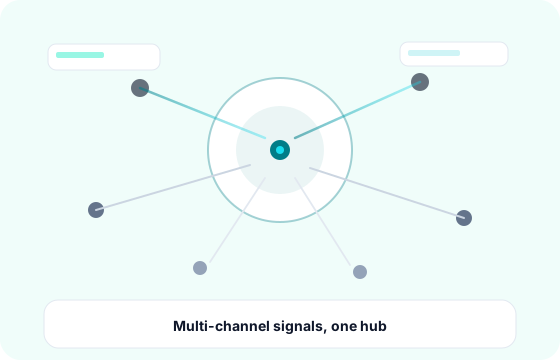
A queue analysts actually trust
The goal is not the longest list, it is the shortest list your team can act on with complete evidence. Tune thresholds tighter around auth and payment surfaces; link clusters and repeat kits so priority rises naturally.
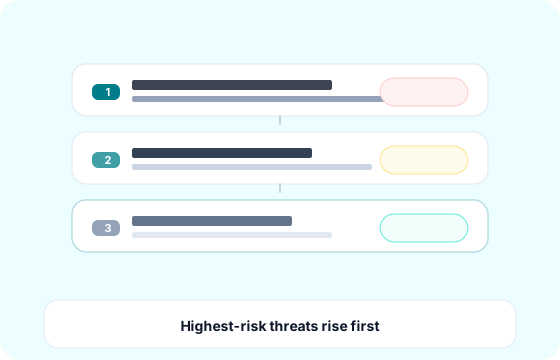
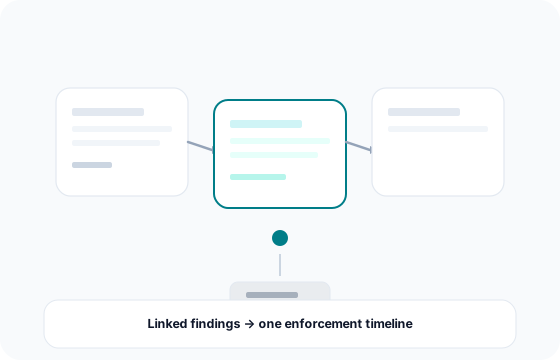
Registrar-ready evidence, one timeline
Stable identifiers, timestamps, captures where appropriate, and a clear customer-confusion narrative beat vague complaints. When hostnames rotate or kits reuse, related findings stay on one campaign timeline instead of starting from zero.
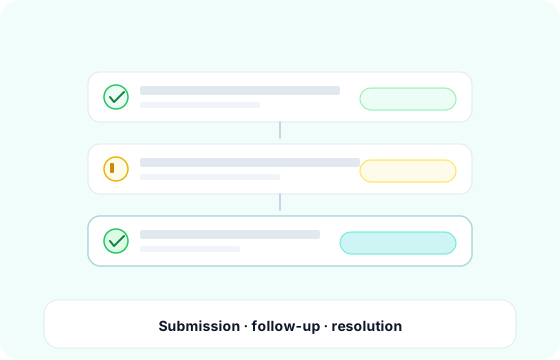
Suspension is not always the end
Track recycle behavior and time-to-return across permutations and hosts. Leadership should see sustained defense, not one-off wins that ignore the next registration wave.
Who this is for
Security and fraud teams protecting auth surfaces, brand and legal teams managing trademark portfolios, and organizations where lookalike domains precede phishing spikes. Also buyers comparing vendors on false-positive discipline and registrar-ready exports.
Protect revenue and customer trust
See how PhishEye centralizes detections, evidence, and takedowns so security, fraud, and brand teams share one operational picture.
FAQs
Common questions
What is typosquatting in simple terms?
How does PhishEye reduce false positives?
Does typosquat monitoring replace certificate monitoring?
How do typo domains connect to active phishing?
Explore further
Related pages
Ready to scope a program for your marks and channels?