
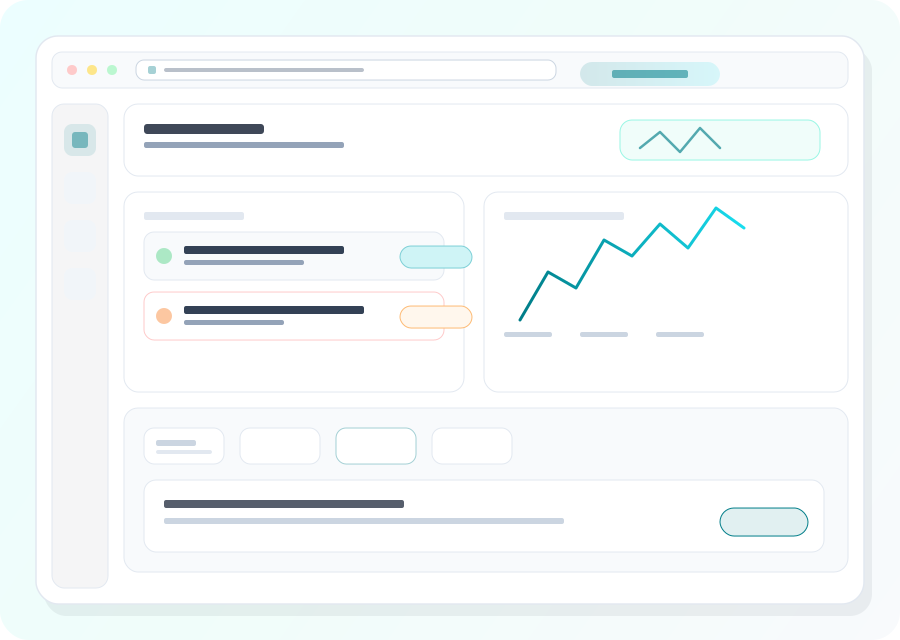
PhishEye connects discovery, investigation, evidence, ownership, and follow-up for digital risk protection services. Teams can use the same operational record to prioritize customer-visible risk, coordinate with providers, and measure progress from first detection through mitigation instead of treating each alert as an isolated event.
Managed layer
Coverage areas
Domains, social, app stores (scoped to your program)
Delivery
Platform workflows + optional managed services
Outputs
Prioritized queues, evidence, takedown tracking
Coverage
Threat patterns programs typically monitor
Programs are tuned to your marks and channels; the list below reflects common categories teams prioritize.
Credential-harvest phishing pages
Pages mimicking your login, MFA, or account-recovery flows — scored by content fingerprint and proximity to real auth surfaces.
Brand-spoofed checkout and support flows
Fake clearance portals, spoofed order-status pages, and scam customer-service hubs that hit revenue and NPS directly.
BEC and wire-fraud lure infrastructure
Domains and pages staged for business email compromise — registered ahead of the campaign, used briefly, then rotated.
Smishing and SMS-driven campaign clusters
Short-lived hosts referenced in SMS lures — patterns that web-only telemetry misses without SMS-feed correlation.
Multi-channel campaign correlation
How one campaign uses email, SMS, ads, and social in parallel — clustered into one case so analyst work doesn't duplicate.
Recycle attacks after first takedown
The same kit returning on a new hostname within hours — tracked and re-enforced on the original case timeline.
Throughput and judgment when your desk is the bottleneck
The essentials of managed delivery, FAQs and comparisons cover scoping, SLAs, and platform-only versus services.
When capacity, not tooling, is the gap
Managed help fits when backlog outpaces hires, time zones leave coverage holes, launches or M&A multiply marks overnight, or leadership expects closure metrics the internal queue cannot sustain. You still own policy: what abuse matters, approved comms language, and what resolved means.
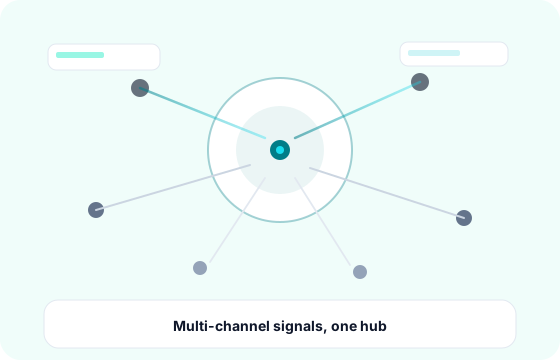
Automation plus analyst bandwidth
Platform automation handles discovery, enrichment, drafts, routing, and stall reminders. Analysts, yours or managed, apply judgment on novel hosts, slow jurisdictions, nuanced policies, and executive-visible incidents. The services layer adds follow-ups, re-submissions, and stubborn threads that exhaust internal rotation.
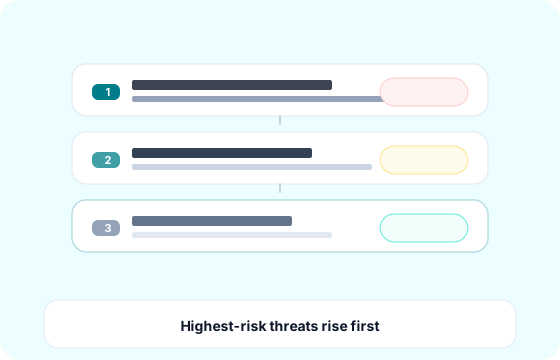
Scope, cadence, and audit-ready records
Onboarding should lock tiers, brands, geographies, channels, and escalation paths. Reporting should match stakeholders: ops metrics for security, trends for brand leadership, evidence trails for legal. Integrate with your ticketing where possible so audits are not trapped in email.
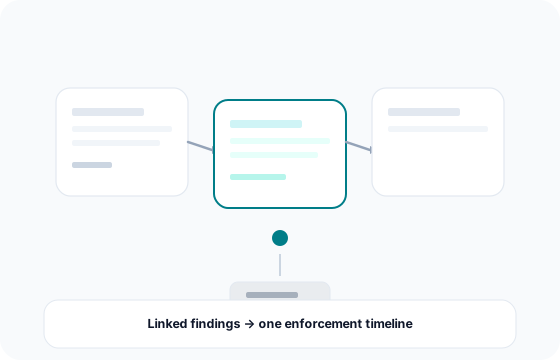
Definitions of done that match reality
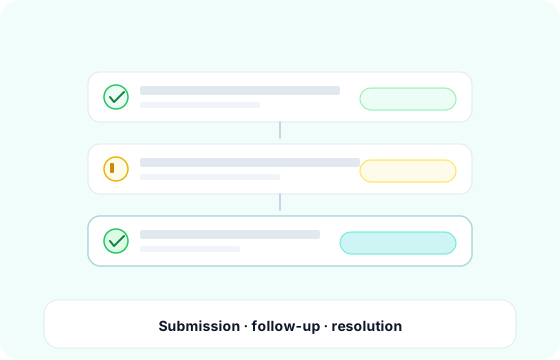
Measure first triage, first provider submission, acknowledgments, customer-visible mitigation, partial outcomes, and recycle, not ticket opens alone. Dashboards should not look green while victims still see scams.
Who this is for
Security and brand leaders who need closure metrics they cannot staff internally, regional teams entering markets with unfamiliar providers, and organizations recovering from incidents that exposed queue gaps. Often paired with platform ownership of tier-one marks and managed overflow for long-tail or overnight coverage.
Protect revenue and customer trust
See how PhishEye centralizes detections, evidence, and takedowns so security, fraud, and brand teams share one operational picture.
FAQs
Common questions
When should we choose managed services over platform-only?
How are priorities and SLAs agreed?
Will we still see everything the analysts see?
Does managed mean we give up governance?
Explore further
Related pages
Ready to scope a program for your marks and channels?